
 Print
2026 ISC Midterm Members Meeting and Beijing Science Dialogue Satellite Symposium 5 on Open Science, Research Assessment and Publishing Successfully Held
2026/10/21 17:39
Origin:ccen.com


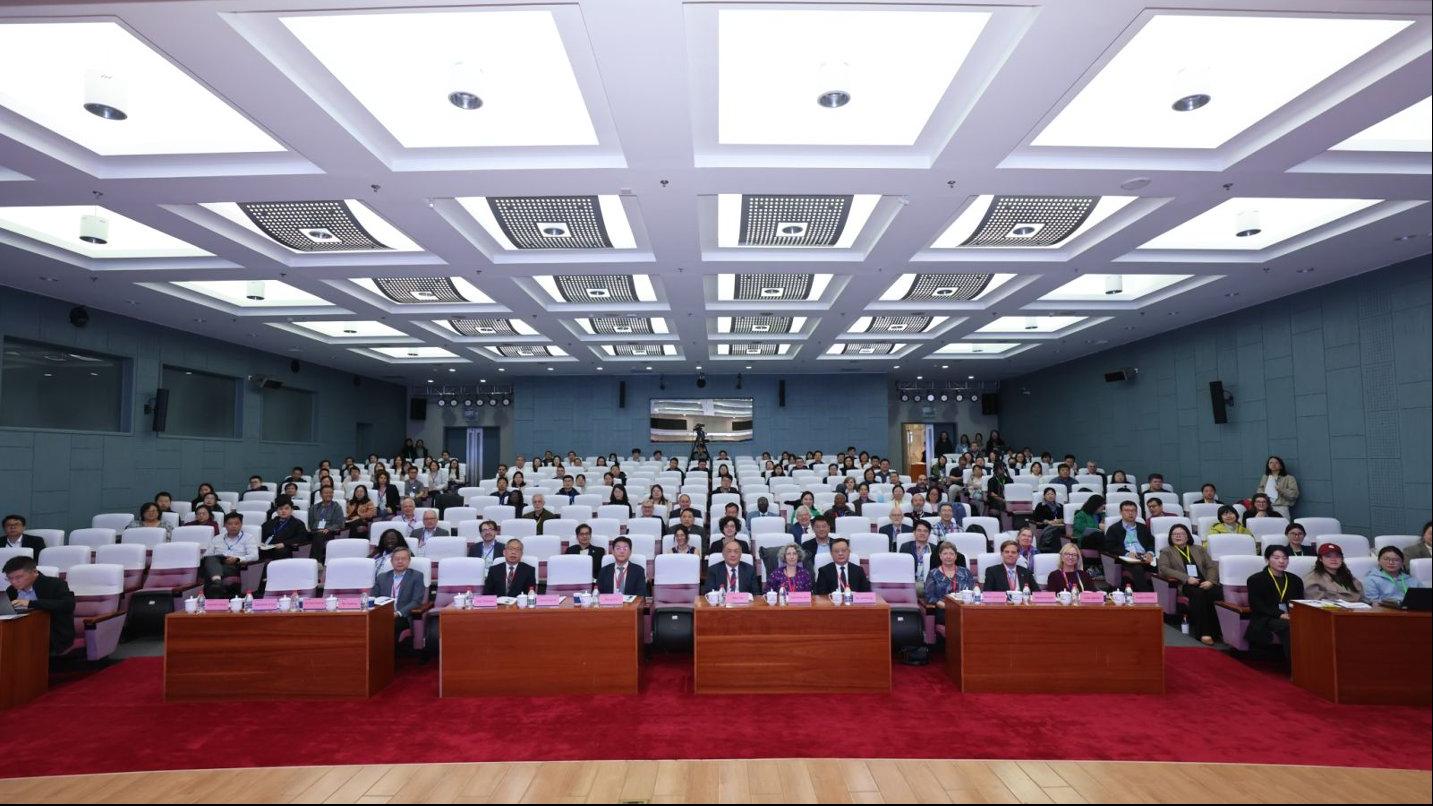
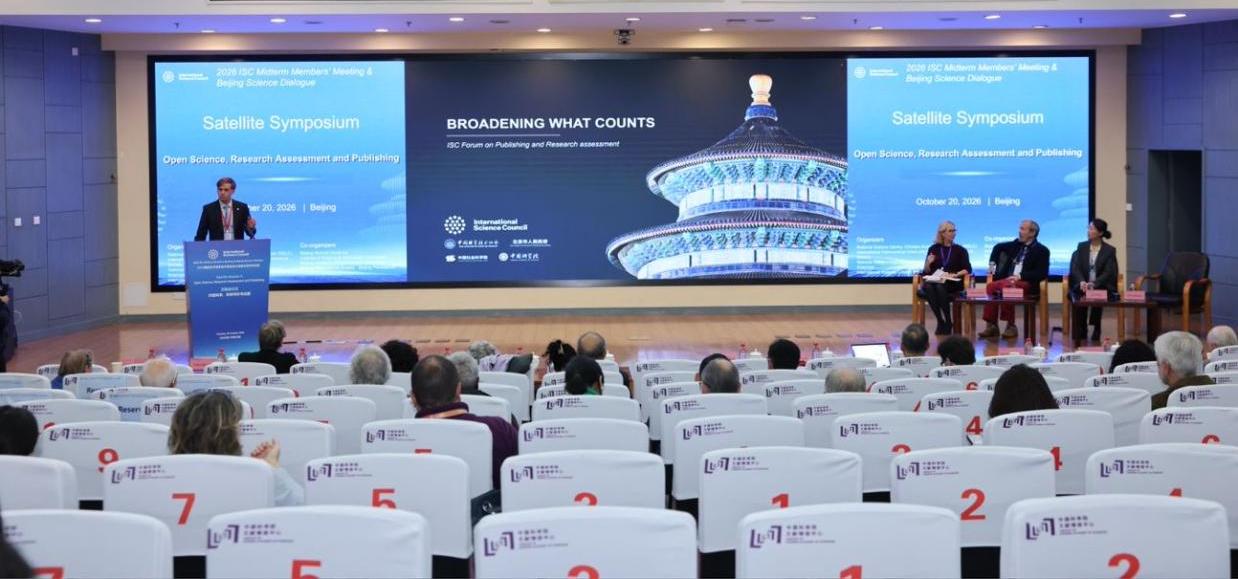
On 20 October, Satellite Symposium 5, “Open Science, Research Assessment and Publishing”, held under the framework of the 2026 International Science Council (ISC) Midterm Members Meeting and Beijing Science Dialogue, took place successfully at the National Science Library, Chinese Academy of Sciences (CAS). It was the only satellite symposium of the 2026 meeting co-organised with the ISC. More than 250 participant—including ISC Members and representatives of Member organisations, Chinese and international astronomers, and experts in open science and publishing—engaged in in-depth discussions on three themes: open science in astronomy, broadening research assessment, and governance for trustworthy scholarly publishing. The symposium featured a rich programme, strong international participation, and the release of outcomes that attracted considerable attention. The participants also visited the exhibition of scientific and technological achievements, learning about the Academy’s research progress in basic frontier research, serving major national needs, the transformation of scientific and technological achievements, and people’s life and health.
High-level, wide-ranging participation focused on global open science governance
The symposium was co-organised by the National Science Library (NSL), Chinese Academy of Sciences (NSLC); the International Astronomical Union (IAU); the Chinese Astronomical Society; the National Astronomical Observatories ((NAOC), Chinese Academy of Sciences (NAOC); and the International Science Council (ISC). It was co-organised with support from Beijing Normal University, the Institute of Science and Technology Information of the Beijing Academy of Science and Technology, the Beijing Astronomical Society, and the Beijing Planetarium. The China International Center for Science and Technology Exchanges and the CAST UN Consultative Committee on Open Science and Global Partnership (CCOS) provided support.
Participants included ISC President Peter Gluckman, President-elect Robbert Dijkgraaf, former ISC President Daya Reddy, and Chief Executive Officer Salvatore Aricò; Diana Mary Worrall, General Secretary of the IAU; Marcelo Knobel, Executive Director of The World Academy of Sciences (TWAS); Nathalie Lemarchand, President of the International Geographical Union; David Castle, Chair of the Scientific Committee of the World Data System; Dan Larhammar, former President of the Royal Swedish Academy of Sciences; Yang Wei, CAS Member, Professor at Zhejiang University, and Chair of CCOS; and Han Zhanwen, CAS Member and President of the Chinese Astronomical Society, alongside Chinese and international scientists in astronomy and representatives of ISC Members and Member organisations.
The opening session was moderated by Vanessa McBride, Science Director at the ISC. Opening remarks were delivered by Catherine Jami, ISC Governing Board, Director of Research (Exceptional Class) at the French CNRS (National Centre for Scientific Research), and Zhang Yun, Deputy Director of the Bureau of Basic Capacity for Science and Technology at CAS. Qu Jiansheng, Director of the NSLC, delivered the welcome address.
The keynote session was chaired by Professor Wu Xuebin, Vice President of the Chinese Astronomical Society. Yang Wei, CAS Member, Professor at Zhejiang University, and Chair of CCOS; Diana Mary Worrall, General Secretary of the IAU; and Cui Chenzhou, Professor at the National Astronomical Observatories, CAS, explored development plans and practical experience in open science, drawing on China’s experience, practices in astronomy, and
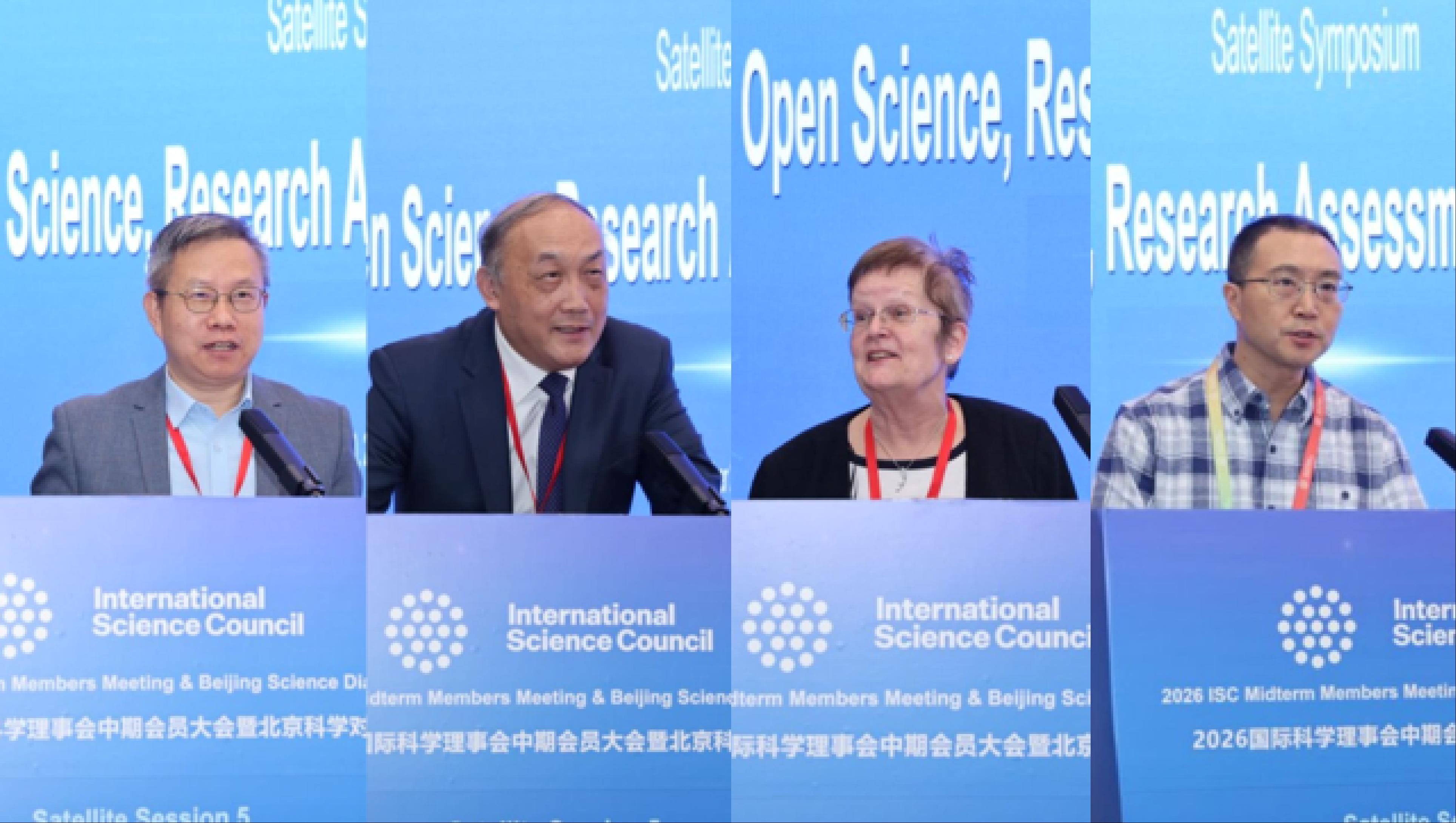
applications of artificial intelligence.
Forward-looking agenda addresses key challenges in science governance
The symposium featured three panel discussions.
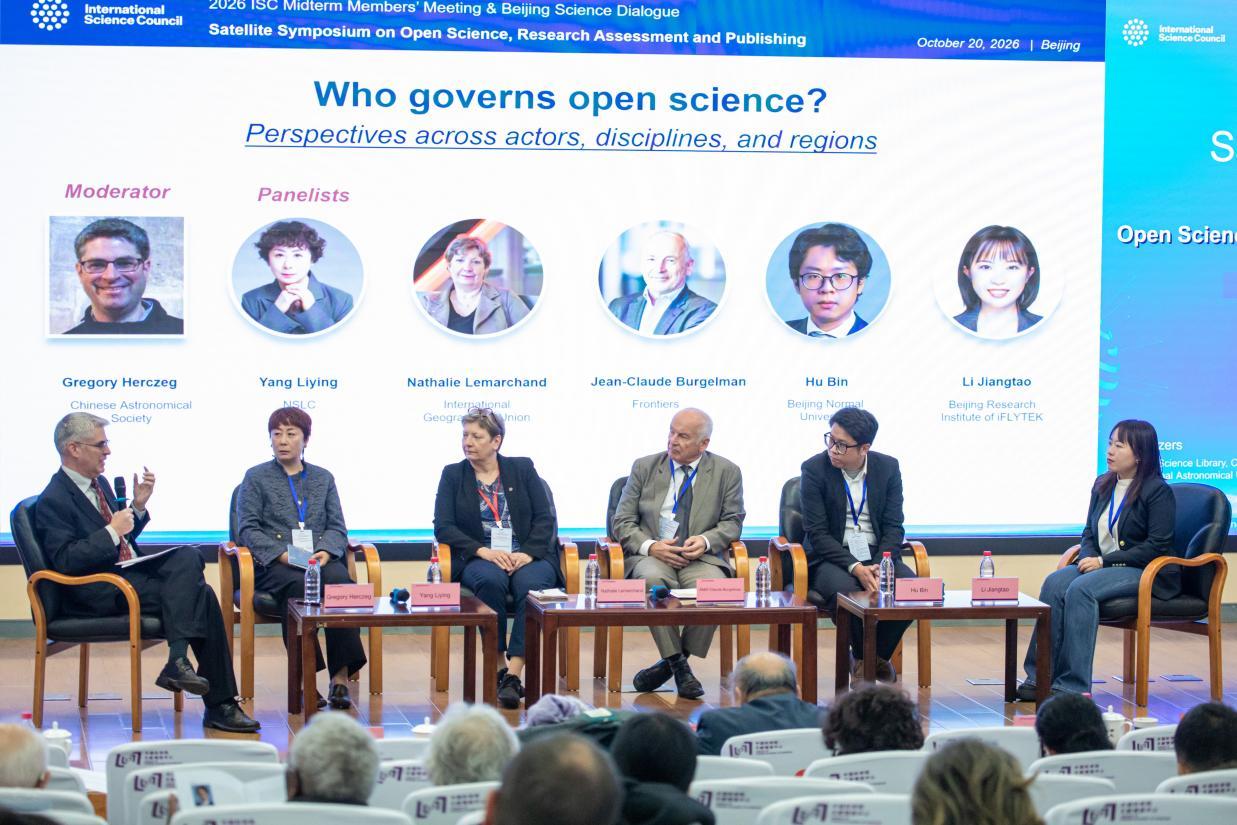
Under the theme “Who Governs Open Science? Perspectives across Actors, Disciplines, and Regions,” Gregory Herczeg, Professor at Peking University, moderated a discussion with speakers from Beijing Normal University, Vrije Universiteit Brussel, the International Geographical Union, the National Science Library of CAS, iFLYTEK, and other institutions. They discussed practical experience and challenges in advancing open science in astronomy, including data sharing, research assessment, and the needs of different stakeholders.
With a focus on broadening recognition of scientific contributions, the ISC convened a dialogue on research assessment reform. Geoffrey Boulton, member of the ISC Governing Board and Chair of the Forum on Publishing and Research Assessment; Xu Fang of the Institutes of Science and Development, CAS; and Felix Dijkstal of the ISC presented survey findings on scientific contributions that remain insufficiently recognised. They then discussed how contributions are recognised across disciplines and regions, how to validate the findings, and the next phase of the Forum’s work with ISC Members and other participants.
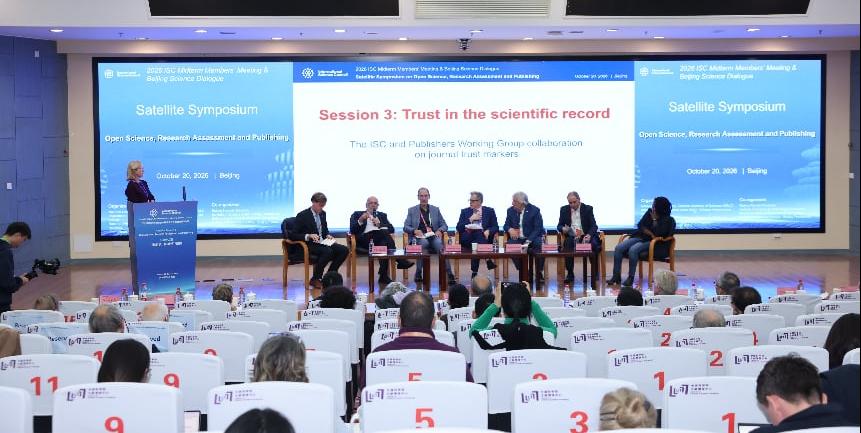
The ISC convened a special session on “Trust in the Scientific Record: Collaboration on Journal Trust Markers.” Speakers included ISC President Peter Gluckman, CEO Salvatore Aricò, Matthias Kaiser of the University of Bergen, James Wilsdon of the Research on Research Institute (RoRI), Nokuthula Mchunu of the National Research Foundation of South Africa, and Steven Inchcoombe of Springer Nature. They outlined progress in collaboration between the ISC and the Publishers Working Group and exchanged views on the proposed journal standards framework, governance arrangements, and trust in scholarly publishing, responding to questions from participants.
Launch of OPEN SCIENCE and other outcomes draws attention
Two outcomes were released at the symposium.
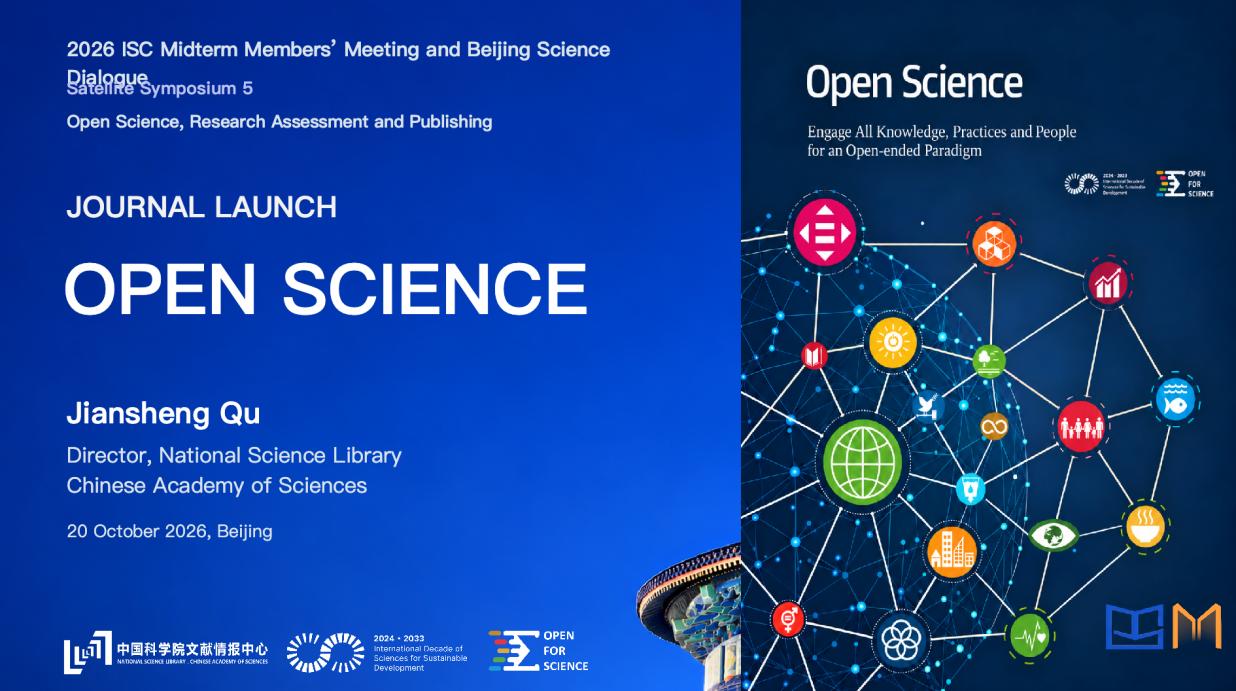
Qu Jiansheng, Director of the National Science Library, CAS, launched OPEN SCIENCE, an open-access journal adopting a new publishing model known as meta-knowledge publishing. It is the first scientific journal in the world to be directly named“Open Science.”The journal was among the first initiatives recognised by UNESCO International Decade of Sciences for Sustainable Development (2024-2033), also known as the “Science Decade.” It is designed as an international, community-driven, fully open-access journal. Its central innovation is to explore a “Meta-Knowledge Publishing” paradigm that moves beyond the boundaries of traditional research papers and uses meta-knowledge as the basic unit of organisation. Research is broken down into identifiable, citable, and computable knowledge objects, supported by a Meta-Knowledge Identifier (MKI) system, enabling a shift from “reading papers” to “exploring knowledge networks.” The journal is also piloting a collaboration with the EU-funded TRUSTparency project to help build a trustworthy knowledge ecosystem. It covers all STEM fields, including mathematics, physics, chemistry, life sciences, Earth sciences, engineering, and computing.
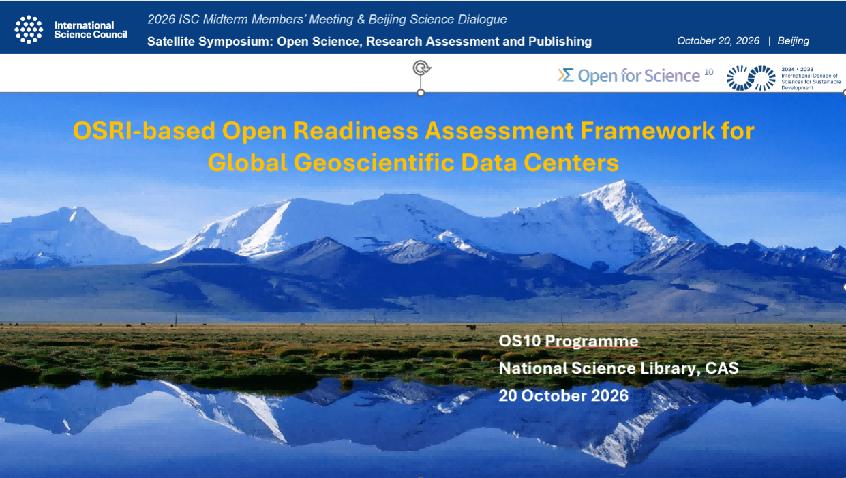
The Open for Science10 (OS10) team under UNESCO Science Decade released the Open Science Readiness Index framework for geoscience data centres (OSRI-data), together with the results of its first assessment. The framework adapts the Open Science Readiness Index (OSRI), proposed by Prof. Yang Wei and other scholars, to the data-centre level and establishes an integrated indicator system covering open access, open data, and open policies. It enables quantitative comparison and ongoing monitoring of data centres’ openness. The first assessment covered 82 national geoscience data centres in 37 countries. The results revealed a marked global North–South divide in open geoscience data: only 3.7% of centres had reached a “mature” level of open science, while approximately 91% remained at the developing or emerging stages. Policy, platforms, and funding conditions were common barriers preventing many centres from advancing open sharing. The OSRI-data framework is intended to help geoscience data centres move towards a mature, equitable, and AI-ready open-data ecosystem, while also offering a methodological reference for assessing data centres in other disciplines.
International cooperation is essential for the co-evolution of science governance
From the morning discussions on the frontiers of open science, to the afternoon dialogue on research assessment reform, and then to in-depth exchanges on trust in the scientific record, the symposium traced a clear path for open science from principles to institutions and from local practice to global collaboration. Whether through astronomy’s pioneering work on open data, the ISC and Publishers Working Group’s framework for journal trust markers, or China’s sustained efforts to build open-science capacity in the Global South, participants saw that open science cannot advance through isolated breakthroughs. It requires the coordinated evolution of infrastructure, assessment systems, the publishing ecosystem, and international governance.
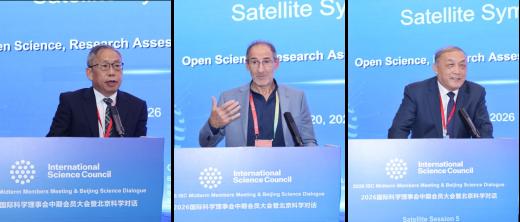
In their closing remarks on the future governance of open science, research assessment, and trustworthy publishing, Han Zhanwen, CAS Member and President of the Chinese Astronomical Society; Salvatore Aricò, CEO of the ISC; and Yang Wei, CAS Member and Chair of CCOS, shared their perspectives. Han said that open science should draw on astronomy’s experience of open collaboration, recognise diverse scientific contributions, and be advanced through long-term cooperation. Salvatore believes that discussing science and technology evaluation from the perspective of artificial intelligence development is inherently of great value, and he affirmed the outcomes of the conference’s exchanges and cooperation. Yang stressed that a key task now is to move from shared principles to coordinated action. On the one hand, scientific contributions must be understood more comprehensively: alongside papers and traditional outputs, greater attention should be paid to building interoperable scientific infrastructure, exploring more consistent, fair, and responsible approaches to research assessment, and safeguarding trust in the scientific record through transparent and rigorous publishing practices. On the other hand, openness must go hand in hand with quality, integrity, and responsibility. International cooperation must be genuinely inclusive. Countries and research communities with fewer resources should not only have opportunities to access scientific knowledge, but also be able to participate meaningfully in knowledge creation, help shape the relevant rules, and contribute to the global development of open science. The benefits of open science should be shared more equitably across disciplines, institutions, and regions.(By Jiangbo Meng, Jin Li)
Copyright © CCEDN.COM.CN. All Rights [京ICP备2024049485号-1] Tel: 0086-10-88820521