
 Print
Print
2025 Sichuan Liangshan Inaugural Lugu Lake Circling Festival: Writing a New Chapter of Promoting "Three Exchanges" via Culture and Tourism
2025/09/17 16:19
Origin:cced.cn


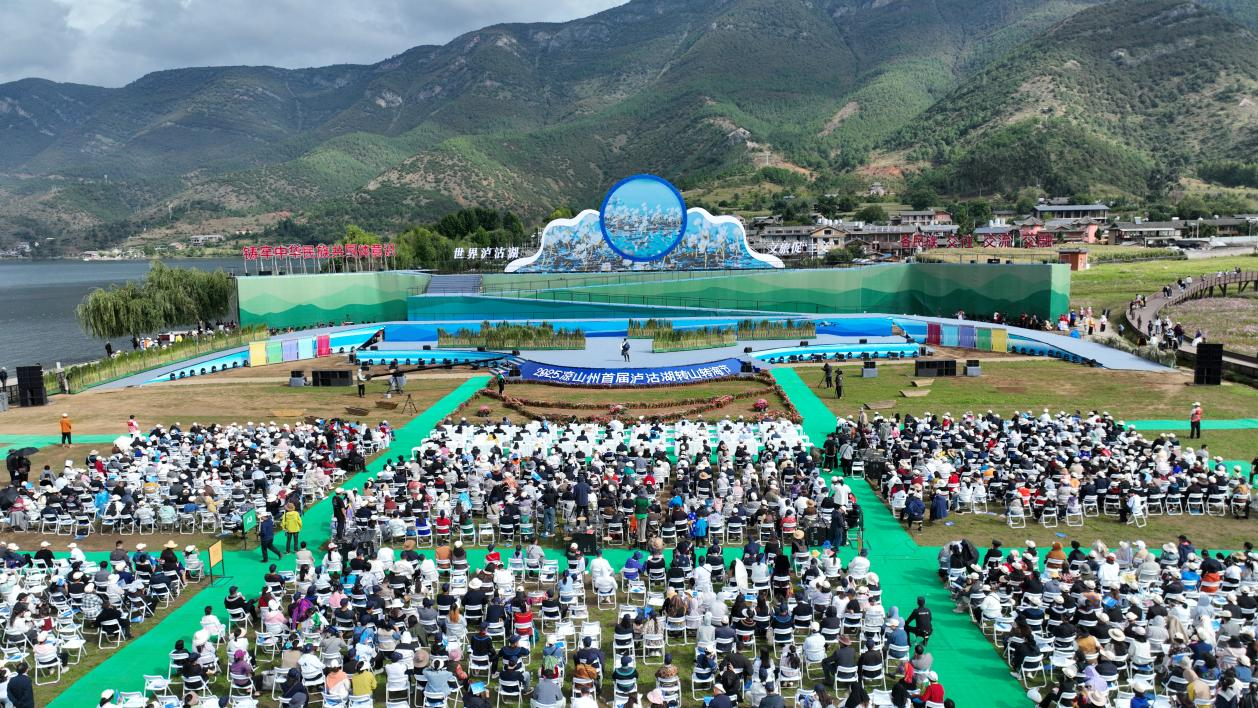
In September, Lugu Lake is surrounded by emerald green mountains, with its waters as clear as a mirror. Muli's Shangri-La Lake, embraced by green waters, shimmers with ripples under the light. On this magnificent land where nature and humanity converge, the 2025 Sichuan Liangshan Inaugural Lugu Lake Circling Festival kicked off. This event not only revives the thousand-year-old traditional customs of the Mosuo people but also builds a platform for dialogue among diverse civilizations from an international perspective. It is a key practice to advance integrated cultural and tourism development and high-quality growth in ethnic areas, and a prominent cultural grand event in this autumn.
Taking Festivals as a Medium: Traditional Culture Radiates Contemporary Vitality through the Integration of Culture and Tourism
The "Lugu Lake Circling" is a vital tradition passed down by the Mosuo people for generations, originating from their reverence and gratitude for natural mountains and waters. To protect and promote this precious cultural heritage, Liangshan Yi Autonomous Prefecture has officially designated the 25th day of the 7th lunar month as the "Lugu Lake Circling Festival," which has been recognized as a local statutory holiday. Residents of Yanyuan County and Muli Tibetan Autonomous County are entitled to a one-day special holiday. The goal is to develop it into another iconic cultural and tourism brand of Liangshan, following the Yi Torch Festival.
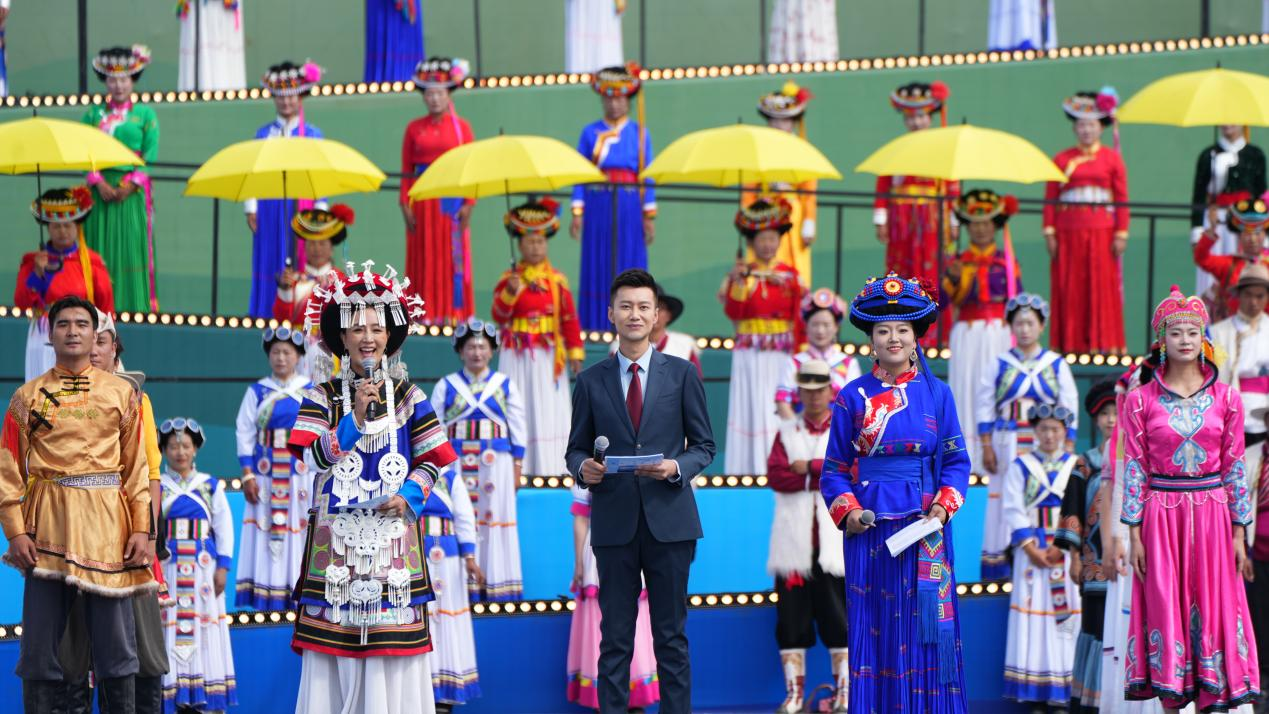
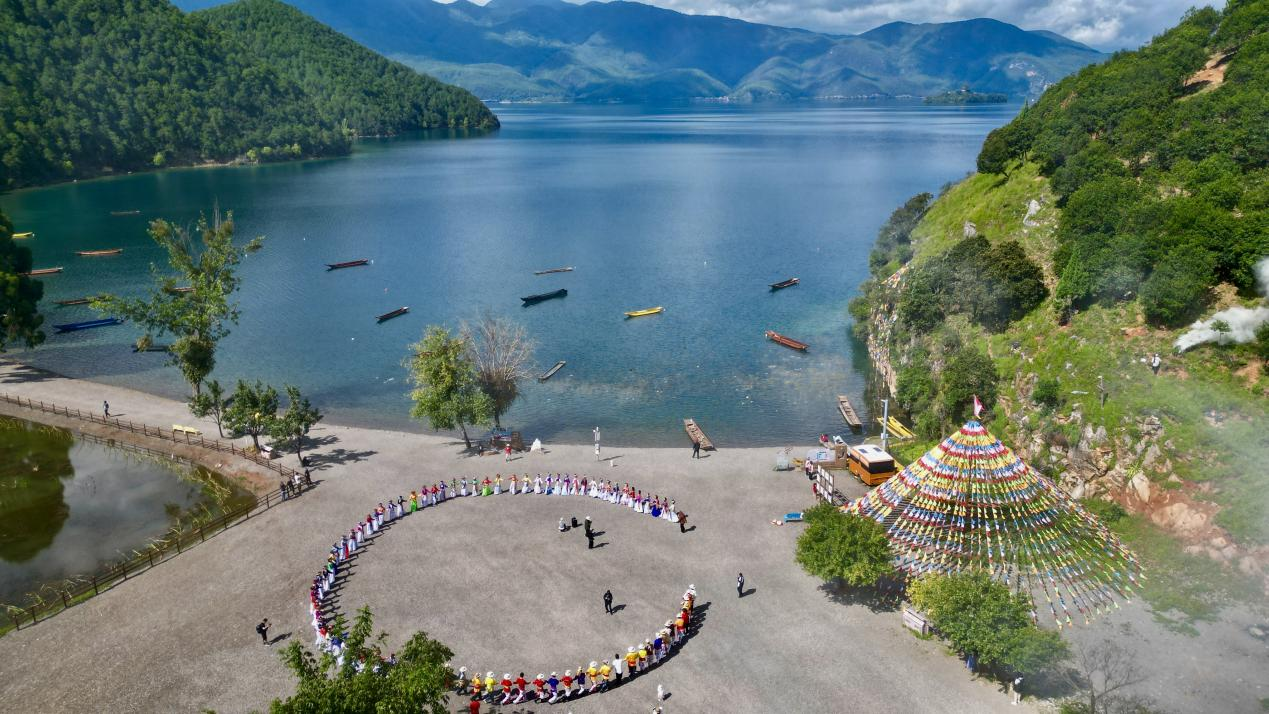
On September 16, celebration events were held simultaneously at Lugu Lake (Yanyuan County) and Shangri-La Lake (Muli County). The Lugu Lake venue presented four wonderful segments: "Symphony by the Lake," "Tribute from Mountains and Seas," "Festival Songs," and "Lugu Lake Circling." Mosuo young people performed the traditional Jiacuo Dance, Daba priests chanted scriptures for blessings, melodious folk songs were sung with distinctive musical instruments, and a phalanx of pig trough boats (traditional Mosuo boats) created an immersive cultural experience for the audience. Meanwhile, the Shangri-La Lake venue launched diverse activities such as lake-circling hiking, folk music festivals, Tibetan costume shows, and fire performances.
This year’s Festival also hosted key events of the "Global People Annual Ceremony." The "Lugu Lake Dialogue" invited cultural scholars, tourism experts, and intangible cultural heritage (ICH) inheritors from around the world to conduct in-depth discussions on cross-cultural cooperation, inheritance and innovation of ethnic cultures, and other topics. Experts and scholars agreed that the Lugu Lake Circling Festival is not only a living inheritance of Mosuo culture but also an important window for the international dissemination of Chinese culture.
The "Tribute Night for Guardians of Ethnic Cultures" held that evening honored 12 guardians of ethnic cultures, including ICH inheritors, cultural scholars, and grassroots cultural workers. The event aimed to pay high tribute and applause to these heroes who safeguard the roots and soul of culture.
Integration of Culture and Tourism: From Distinctive Festivals to an All-for-One Ecological Circle
Leveraging the advantages of the cultural and tourism platform, this year’s Festival offered a series of supporting activities at the Lugu Lake venue—such as the Starry Sky "Axia" Party (Axia refers to the Mosuo term for a loved one) and the Mosuo Food Market—in addition to core ceremonies and forums. These activities attracted tourists from across China, as well as local Mosuo, Tibetan, and Naxi people, who jointly participated in folk experience activities. The festival interactions not only turned the thousand-year-old folk culture from "inheritance" into "experiential" but also built a bridge for cultural integration.
To promote the continuity and development of traditional culture, local authorities have established Mosuo Culture Inheritance Bases, which regularly offer ICH courses (e.g., textile craftsmanship, folk songs and dances, Daba scripture studies) and hold folk activities such as coming-of-age ceremonies, bonfire parties, and Lugu Lake Circlings. These efforts encourage tourists to transform from "spectators" to "participants" and "communicators."
In terms of cultural innovation, local entities have actively promoted the creation of real-scene dramas based on traditional Mosuo stories, developed theme-based study-travel products, and invited online influencers to participate in cultural communication—effectively connecting traditional culture with modern life through multiple approaches.
Integrated cultural and tourism development has significantly driven regional economic growth. Since the start of 2025, the number of tourists to Lugu Lake Scenic Area has increased by over 30% year-on-year. Many villagers have returned to their hometowns to start businesses, opening homestays, restaurants, and handcraft shops. Statistics show that there are nearly 500 homestays around the lake, creating more than 3,000 jobs. The cultural and tourism industry has become a key pillar of rural revitalization. During the 2025 summer vacation, the number of tourists and tourism revenue of Lugu Lake increased by over 30% and 40% year-on-year respectively, forming a positive development pattern of "beautiful ecology, thriving culture, and booming tourism."
Today, Lugu Lake is gradually developing into a cultural and tourism ecological circle integrating cultural inheritance, ecological protection, and people’s livelihood improvement, steadily moving toward becoming a world-class ethnic cultural and ecological tourism destination.
Ecology as the Cornerstone: Safeguarding the "Plateau Pearl" for Sustainable Development
In recent years, Liangshan Yi Autonomous Prefecture has adhered to the concept of "ecology first, green development," implementing systematic protection and sustainable development of Lugu Lake and Muli’s Shangri-La Lake. Yanyuan County has promoted eco-tourism based on its brand of "Millennium Bronze Culture · World-Class Lugu Lake," while Muli County has leveraged the ecological brand of Shangri-La Lake—achieving coordinated progress in ecological protection and people’s livelihood improvement.
For Lugu Lake, Sichuan and Yunnan provinces jointly formulated the "1+3" protection and governance plan and established an inter-provincial coordination mechanism. Currently, more than 10 lake-patrolling teams have been set up to conduct daily garbage cleaning, sewage discharge supervision, and dissuasion of uncivilized behaviors. Through ecological relocation, construction of lakeside ecological corridors, and vegetation restoration projects, Lugu Lake has achieved a shift from "human encroachment on the lake" to "human withdrawal for lake restoration," with its water quality consistently meeting Grade Ⅰ surface water standards.
Muli’s Shangri-La Lake has also implemented strict ecological protection measures. Muli County Government has demarcated ecological red lines, strengthened water conservation and biodiversity protection, and carried out wetland restoration and grassland ecological management to ensure the integrity and authenticity of the lake’s ecosystem. Meanwhile, it has built lake-circling ecological trails and viewing platforms, realizing the organic integration of ecological protection and ecological experience.
Currently, tourism infrastructure in both areas is continuously being improved. Particularly in Lugu Lake Scenic Area, over 50 kilometers of lake-circling roads have been newly built or renovated, more than 30 kilometers of tourist trails have been paved, and 12 ecological parking lots have been completed—effectively alleviating traffic congestion during peak tourist seasons. Direct tourist buses from Xichang to Lugu Lake have been launched, and multiple bus routes have been optimized to connect villages around the lake with core scenic spots, making travel more convenient and eco-friendly for tourists. In addition, local authorities have promoted smart tourism development: tourists can book tickets, check scenic area information, and sign up for folk experience activities via a mobile app, significantly enhancing the convenience and comfort of tourism services.
From "worshipping mountains and waters" to "revitalizing mountain townships," the Lugu Lake Circling Festival has achieved a magnificent transformation from a folk festival to a cultural and tourism IP. It not only endows Mosuo culture with sustainable vitality on a broader stage but also injects vivid momentum into accelerating the construction of a "prefecture strong in culture and tourism" and writing a new chapter of Chinese-style modernization in Liangshan. (Text/Photos by Deng Zhao)
Copyright © CCEDN.COM.CN. All Rights [京ICP备2024049485号-1] Tel: 0086-10-88820521