
 Print
Print
Dongqu District“Five Streets and One Town” On-the-Spot Research: Exploring New Ideas for Connotative Urban Development
2025/07/18 16:42
Origin:cced.cn


On July 17, the Standing Committee of the Dongqu District Party Committee specially listened to the Report on the Achievements of On-the-Spot Research by Party and Government Chiefs of Dongqu District Streets (Towns) and studied opinions on the transformation of the research results. Ling Yonghang, Secretary of the District Party Committee, presided over the meeting.
Mao Zhiqiang, Deputy Secretary of the District Party Committee and District Chief, attended the meeting. Liu Xiao, Director of the Standing Committee of the District People's Congress; Lin Tinghua, Chairman of the District Political Consultative Conference; and Gao Yinghua, Director of the Park Management Committee, were present as non-voting delegates. Gao Lei, Zhang Li and Qiu Lei, Deputy Secretaries of the District Party Committee, also attended the meeting.
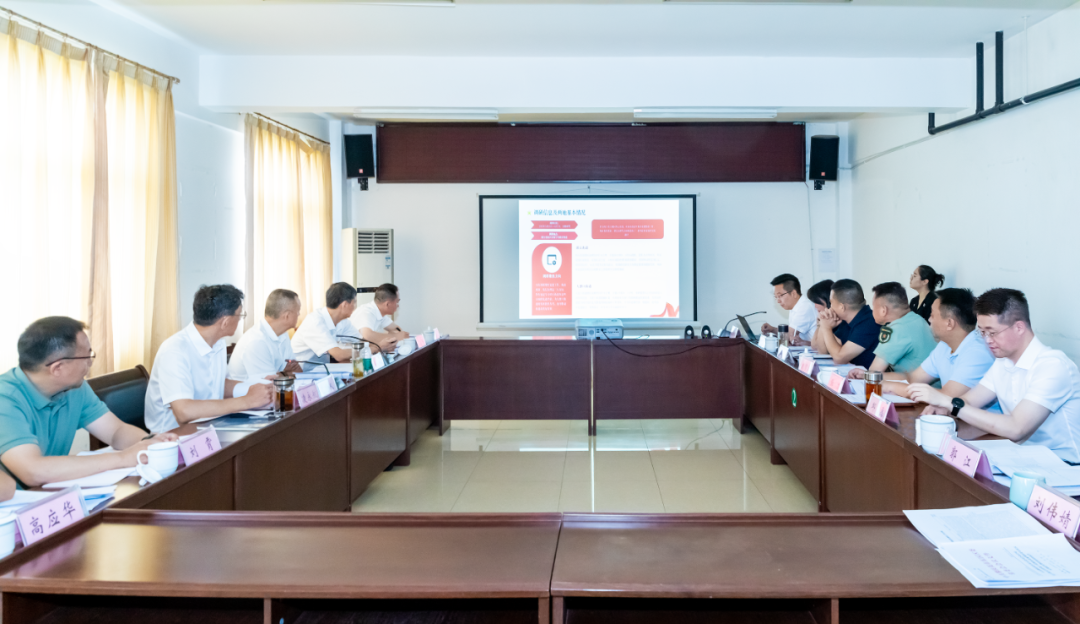
It is learned that in the first half of this year, Panzhihua City selected Party and government chiefs of towns (streets) to conduct on-the-spot research in developed regions. The "top leaders" of streets (towns) in Dongqu District went to places like Jiaxing, Huzhou, Huangshi and Chengdu for in-depth on-the-spot research and study.
At the meeting, heads of various streets (towns) in Dongqu District made detailed reports on the research situation, learning experience and transformation suggestions regarding their on-the-spot visits to 10 places including Jiaxing Haining Xiashi Street, Chengdu Jinniu Xi'an Road Street and Huangshi Tuanchengshan Street. By benchmarking against the experiences of advanced regions in industrial development, grassroots governance and people's livelihood services, they conducted in-depth analysis of development gaps, systematically sorted out replicable innovative concepts and successful practices, and put forward development ideas and specific measures in line with Dongqu District's reality, focusing on fields such as "systematic reshaping", "digital empowerment" and "cultural and tourism IPs".
The meeting pointed out that promoting common prosperity is the core task of Panzhihua's high-quality development. Efforts must be based on key areas such as industrial integration, urban renewal and grassroots governance, with a particular focus on specific starting points like the construction of beautiful and harmonious villages and community economic development. It is essential to be good at transforming the achievements of external on-the-spot research into long-term institutional mechanisms. We must not just stay at the level of ideas, but take solid actions to turn ideas into actual results.
The meeting emphasized that we must always adhere to the spirit of reform and innovation, face difficulties and challenges directly, and be good at identifying breakthrough points through learning from others. Learning from advanced experiences must not mean mechanical copying; instead, they must be adapted to the reality of Dongqu District and transformed into practical and effective measures that can be implemented and yield results. For the work already carried out, we must summarize experiences in a timely manner, optimize and improve them; for difficulties encountered, we must innovate ideas and implement targeted policies. We should truly turn learning achievements into practical results for promoting high-quality development, so that reform and innovation can deliver tangible outcomes in Dongqu District.
The meeting stressed that we must focus on the goal of modernizing grassroots governance, take property management reform as a breakthrough point, coordinate multiple forces, and build a new pattern of community governance led by Party building and featuring multi-stakeholder co-governance. We should innovate and promote the "trust-based" property service model, improve the charitable common prosperity linkage mechanism, and strive to create a number of people's livelihood reform projects with demonstration effects. Leading cadres of streets (towns) must take the initiative to assume responsibilities, include improving the quality and efficiency of property management in key reform topics, integrate policy resources, form institutional innovation achievements, and promote substantive breakthroughs in the modernization of the grassroots governance system and governance capacity. (Text/Photos by Tao Honglin, Xu Jinxia)
Copyright © CCEDN.COM.CN. All Rights [京ICP备2024049485号-1] Tel: 0086-10-88820521